Latest news from ISOLPHARM
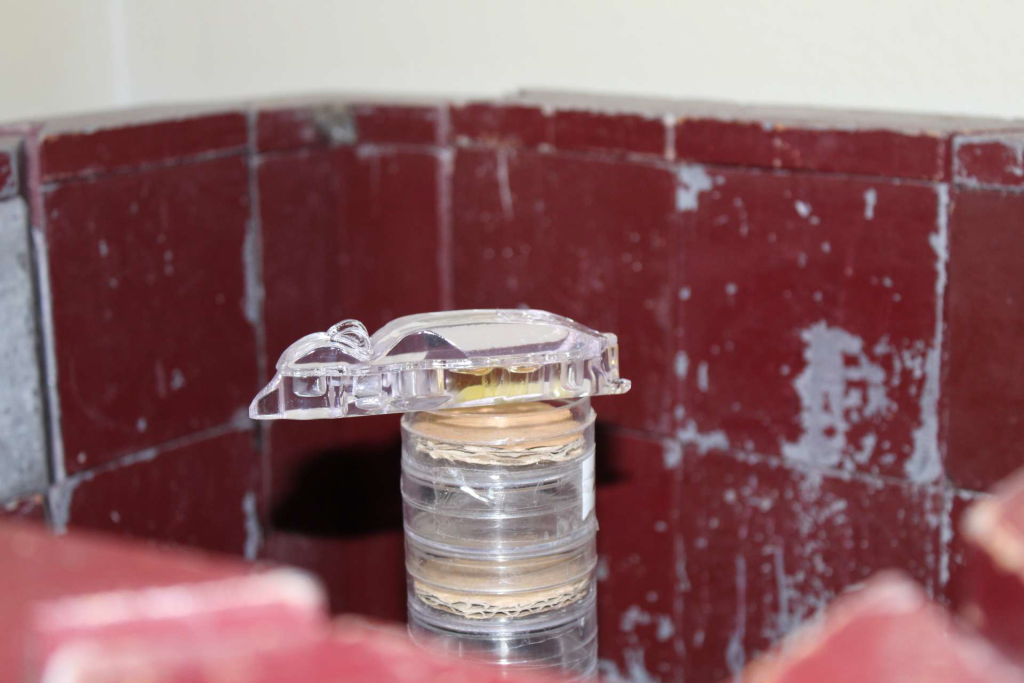
Gamma camera imaging experiment at LENA
In May 2025 the WP3 of the ADMIRAL experiment performed a characterization test of the gamma camera using Ag-111 produced at LENA, Pavia. For the first time a mouse phantom[…]
Read more
FisMat 2025 – ISOL technique for the production of medical radionuclides
We are proud to announce that the ISOLPHARM group will arrange a thematic workshop entitled ISOL technique for the production of medical radionuclides at the FisMat 2025 conference, which will[…]
Read more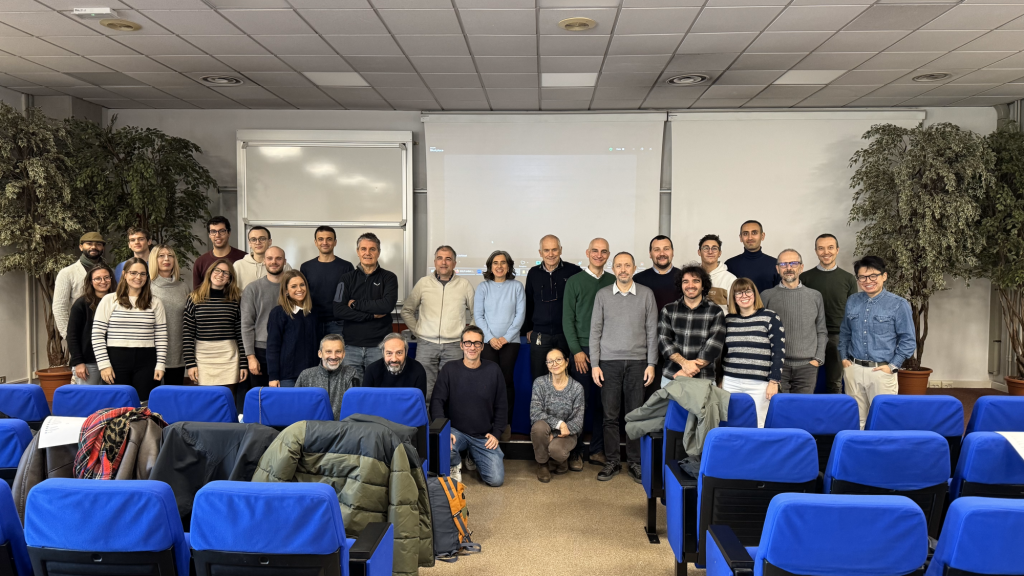
ISOLPHARM 2024 annual meeting
On December 12th, the ISOLPHARM 2024 annual meeting took place at the Legnaro National Laboratories of INFN. The Work Packages of the ADMIRAL and ISOLPHARM_CORE experiments showed their latest results[…]
Read moreA Large Collaboration Between Universities and Research Centers
The ISOLPHARM Project was born from the collaboration between the Departments of Pharmaceutical and Pharmacological, Department of Chemical Sciences of the University of Padova and the Legnaro National Laboratories (LNL) of the National Institute of Nuclear Physics (INFN) where the Selective Production of Exotic Specie (SPES) project in under development. By means, of Isotope Separation On-Line technique both traditional and innovative radioisotopes will be produced with high-specific activity, going beyond the state-of-art of the radioisotope production.
Read more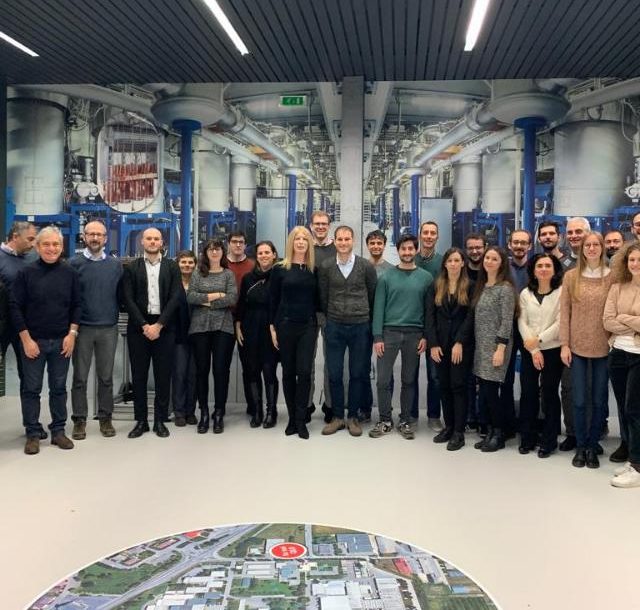
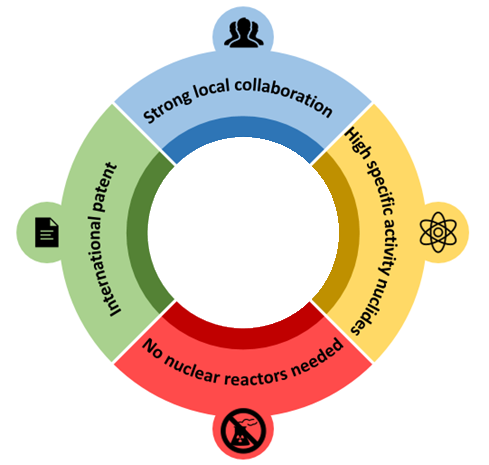
Strengths and key features
The key features of ISOLPHARM are: a) the presence of a strong local collaboration between INFN-LNL, INFN-PD, INFN-PV, TIFPA, UNIPD and UNIBS in many fields of research, ranging from the production of the RIBs to the employment of the radionuclides. b) the ISOL technique, which can easily provide high specific activity radionuclides. c) the INFN patent, which proves the innovation and excellence of the project. d) the low environmental and social impact, since nuclear reactors are not used for the provision of the radionuclides, which traditionally may be obtained irradiating massive amount of materials, that lately become tons of nuclear wastes.
Advantages
VERSATILITY
Production of a large set of radionuclides carrier-free and with large radionuclide purity
INNOVATIVITY
Many unconventional radioisotopes (short T 1/2) difficult to produce with traditional techniques
FLEXIBILITY
On-line mass selection by tuning the separator; easy production of different radionuclides
GREEN
Low production of radioative waste material
2023-2025 Project
ISOLPHARM_ADMIRAL
The future for radiopharmaceutical production at ISOLPHARM